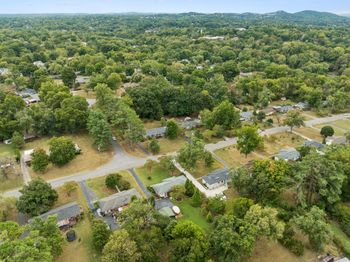
New - Just Now
$389,000
Active
3
Beds
2
Baths
1743
Sqft
0.04
Acres
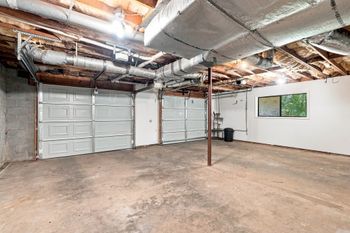
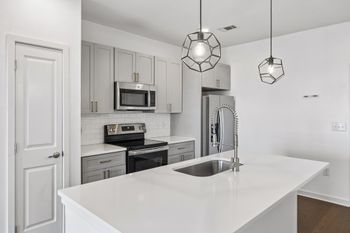
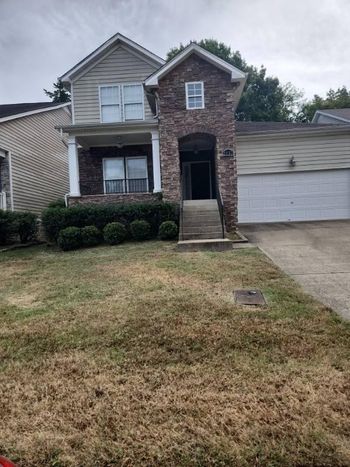
3067 Whitland Crossing Dr, Nashville, TN 37214
MLS#: 3623985



Nashville's housing market has shifted over the past couple of years — and if you're buying right now, that shift is worth understanding clearly. Not just the headlines, but what the numbers actually mean.
According to a Redfin analysis of 2025 MLS data, the typical Nashville-area buyer paid about 3.6% below the original list price. On a $494,000 home — Nashville's median list price last year — that's roughly $17,800 back in your pocket.
But here's the part that matters as much as the discount: about 36% of Nashville buyers paid at or above list price. This is not a market where every seller is desperate, and every buyer walks away with a deal. It's a market where knowing which homes have room and which ones don't is the whole game.
The 3.6% figure is the average across all Greater Nashville sales — the homes that sold quickly at list price, the ones that sat and got hammered down, and everything in between.
For buyers who successfully negotiated below list, the average discount was 6.4%. That's a bigger number — but it skews toward homes that were overpriced to begin with. Those sellers started too high, the market told them so, and they had to come down to find a buyer.
The practical takeaway: the discount you can realistically expect depends almost entirely on how the seller priced the home in the first place. A well-priced home in a strong price range may have multiple offers and sell at or above list. A home that's been sitting for 60 days with two price reductions is a completely different conversation.
Price reductions get the headlines, but they're not the only tool. In the current Nashville market, buyers are successfully asking for:
This is one of the most common mistakes we see buyers make right now: dismissing a listing because it's been sitting.
A long days-on-market count doesn't necessarily mean something is wrong with the house. In a lot of cases, it means the seller started with the wrong price and has been chasing the market down ever since. By the time a home has been listed for 60, 90, or 100+ days and gone through one or two price reductions, it may finally be landing where it should have started — and now you're the buyer who gets to take advantage of that.
What to look for in those situations:
We pull this data from RealTracs regularly. A home that's been sitting isn't automatically a problem — it's a question worth asking.
Not every listing is negotiable, and misreading the situation can cost you a house you actually want.
More room to negotiate:
Less room to negotiate:
The difference between those two scenarios isn't always obvious from a listing photo and a Zillow page. It shows up in days on market, price history, seller motivation, and what the comps actually say — not what the list price implies.
A few practical things that hold true right now across Davidson, Williamson, Wilson, Rutherford, and the surrounding counties:
Nashville isn't distressed. Prices haven't collapsed. Good homes in good condition at the right price still sell. What's changed is that buyers have more time, more options, and more ability to ask for things than they did in 2021 or 2022.
That advantage only works if you know how to read a specific listing — not just the general market — and know when to push and when to move fast. That's where having the right representation matters.
Often yes — but it depends on the home. About 64% of Nashville-area buyers in 2025 paid below list, with an average discount of 3.6% across all sales. Homes that were overpriced to begin with tended to sell at steeper discounts. Well-priced homes in strong price ranges still attract full-price offers and sometimes more.
There's no universal number. The right offer depends on what comparable homes have sold for, how long the listing has been active, whether it's had price reductions, and the home's condition. An unsupported lowball on a fresh, well-priced listing will likely get rejected. A data-backed offer on a home that's been sitting for 90 days is a different story entirely. Our page on writing an offer in Nashville walks through how that process works.
Common concessions include seller-paid closing costs, repair credits after inspection, mortgage rate buydowns, and price reductions. Which one makes the most sense depends on your financing situation and what you need most at closing.
Not automatically. A long days-on-market count often means the seller started too high and has been adjusting. Once the price lands where it should be, that home can be a real opportunity. The question to ask is whether the current price reflects what the home is actually worth — not whether it sat.
By most measures, yes — more so than it's been since before the pandemic. Inventory is up, days on market are longer, and buyer leverage has increased meaningfully. It's not a distressed market, but the balance has shifted compared to 2021–2022.
It can, if it's not grounded in data or if the home is well-priced and generating interest. The goal isn't to go low — it's to go accurate. An offer that reflects what the home is actually worth, supported by comps, is much more likely to start a productive conversation.
Thinking about buying in Nashville or the surrounding counties?
James and Stephanie Crawford have been working this market for more than 22 years. We know which listings have room and which ones don't — and we'll help you make an offer that makes sense for your situation, not just one that sounds aggressive.
Talk to Us About Buying →.png)
James and Stephanie Crawford are Nashville natives and the team behind Nesting Realty. With 22+ years of experience and more than 500 transactions across Davidson, Williamson, Wilson, Rutherford, Sumner, Cheatham, and Robertson counties, they offer buyers and sellers direct, experienced representation — no hand-offs, no assistants running your deal. Learn more about how they work.
"James and Stephanie sold my Bellevue condo, and were awesome to work with. They came up with a smart list price, provided great info to prepare my condo for the market, and were communicative throughout the process."
"We've worked with James and Stephanie for over 20 years. They've helped our family buy and sell homes all across Nashville—Donelson, Mount Juliet, Antioch, and Lebanon. They are truly among the best real estate agents in Nashville."
"They know the Nashville market inside and out. Deep knowledge, years of experience, excellent communication, and they are good people, down to earth, and honest. No bs."
"I've been in real estate since 1982 in another state, so it wasn't hard for me to choose Stephanie! She's tech savvy, knows the market, and her service is without a doubt the best."
.png)
People don’t move to Nashville looking for “the best neighborhood.” They move looking for the right fit—for their commute, their budget, their stage of life, and how they actually live day to day.This guide reflects how buyers are choosing neighborhoods in 2026, not 2016. We’ll cover city neighborhoods and suburbs, what’s changed in the last few years, and which areas consistently rise to the top

Pricing your Nashville home correctly is the single biggest factor in whether it sells — and how much you actually net.In today’s market, pricing isn’t about optimism or leaving “wiggle room.” It’s about understanding how buyers behave right now and positioning your home accordingly from day one.We see this constantly across Middle Tennessee: good homes that should sell quickly end up sitting, g
For about a decade, the “move to Nashville” momentum was powered by two things: relatively affordable land and historically low interest rates. In early 2026, the math has changed. Nashville isn’t the “bargain of the South” anymore—but we have become something that matters just as much when you’re making a long-term move: stable.Inventory is up compared to the ultra-tight years, and that has quie