


New - 1 Hour Ago
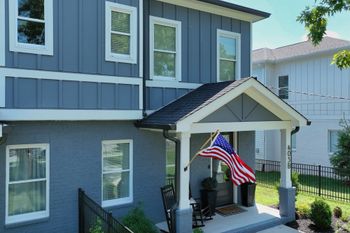

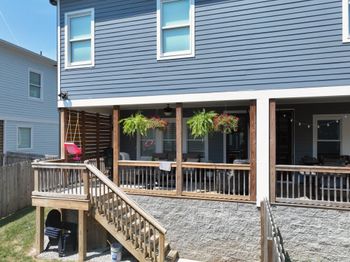


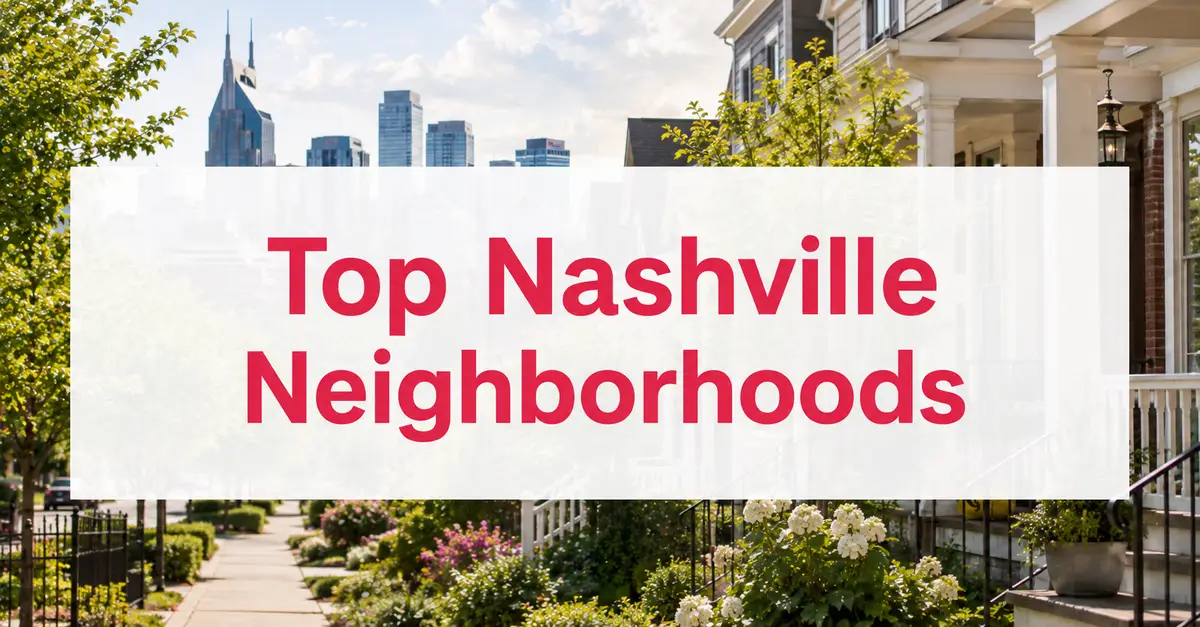
Nashville has more homes for sale right now than it has had in years. Greater Nashville hit six months of inventory in June 2026 — the line economists use to separate a seller's market from a buyer's market — with 15,617 active listings and a median single-family price of $537,000.
What that means practically: you can look at more than one neighborhood before you decide. A few years ago that wasn't realistic.
So this is a list of twelve areas worth your time in 2026, grouped by what you're solving for — proximity, price, space, or schools. Every one links to current listings so you can see what's actually available today rather than what a blog post said last spring.
📊 Where the market stands, from our own monthly tracking:
Sources: June 2026 market report and April 2026 by the numbers.
Most people don't need all twelve. Find your row, then read those sections first.
👨👩👧 Raising a family
Nolensville for the Williamson County school case, Bellevue for space without leaving Davidson, Hendersonville for lake access and Sumner County schools, Cane Ridge in Antioch if the budget is the binding constraint. Confirm the school zone by address in all four.
💼 Young professional, want to be in it
Germantown and Wedgewood-Houston put you inside the restaurant and gallery scene on foot. The Gulch if you want a building with a doorman and no yard. Sylvan Park if you want the short commute but a quieter street to come home to.
📈 Buying for return, not to live in
Antioch moves more units than any ZIP in the county, which means both liquidity and comps. Madison and Inglewood carry the clearer appreciation stories. The neighborhoods bordering the East Bank are the long play — a decade, not three years.
🔑 First house, tightest budget
Antioch, Madison, and Inglewood are the three lowest entry points that keep you inside Davidson County and Metro services. Antioch's median runs roughly $130,000 below the county median.
🏡 Downsizing or done with maintenance
The Gulch and Germantown put daily errands within walking distance and hand the exterior to someone else. The Nations has newer townhomes with single-level options. Hendersonville has one-level homes on real lots, and right now it's the softest market on this list to negotiate in. Ask us about step-free entries and door widths — we pay attention to that.
🌳 Need a yard and a garage
Bellevue and Madison give you the most lot per dollar inside Davidson County. Nolensville and Hendersonville if you're willing to cross a county line for it.
🔎 On safety: it's the question we're asked most and the one we won't answer with a ranked list. Crime data varies block to block far more than it varies between neighborhoods, and any agent who hands you a tidy list of "safe" and "unsafe" areas is telling you about their assumptions, not your street. Pull the Metro Nashville Police Department's public crime mapping for the specific addresses you're weighing, and read our take on whether Nashville is a safe place to live. We're glad to walk through the data on any address with you.
Highest price per square foot in the city. You're buying location and giving up lot size.
550 acres along the Cumberland, roughly ten times the footprint of the Gulch. The new Titans stadium topped out in late 2025 and opens for the 2027 season. Oracle filed demolition permits on its 80-acre River North site in January 2026 for a $4.5 billion campus, first phase targeting 2028. TPAC breaks ground in 2027.
There is no housing to buy on the East Bank itself yet — Eastpoint's first residential buildings only broke ground in May 2026. What you're really deciding is whether to buy in the neighborhoods that border it.
→ Our full breakdown of what the East Bank means for nearby property values
Nashville's oldest neighborhood sits directly across the river from the Oracle site, and the planned pedestrian bridge will connect its residential core to the campus. Brick sidewalks, Victorian rowhouses, an 18-block grid, and a restaurant density nothing else in Middle Tennessee matches.
Median is around $665,000, and average active listing price is well north of that — this is not an entry-level market. Homes have been taking 51 to 83 days, which is real leverage compared to 2022.
→ Germantown neighborhood guide · 37208 listings
High-rise living a few blocks from Broadway, with restaurants and gyms at street level and no yard to mow. If a lock-and-leave building is what you want, this is where Nashville concentrates it.
Here's the part worth paying attention to: condo closings fell 4% in June while condo inventory jumped 22%. Median condo price is $349,945 against $537,000 for single-family. That gap is the widest it's been in years, and it means negotiating room — if the building's financials hold up.
→ The Gulch guide · Downtown condo listings · 2026 condo financing changes
Older bones, newer infill, and a shorter drive downtown than the mileage suggests.
Craftsman cottages on a tidy grid of tree-lined streets, McCabe Park and its golf course in the middle, and a low turnover rate that tells you most of what you need to know. Quick access to Charlotte Pike, West End, and I-40.
The housing stock is more varied than its reputation — original 1920s and '30s cottages, mid-century ranches, and a steady supply of newer infill townhomes at a lower entry point than the historic homes.
→ Sylvan Park guide · Current Sylvan Park listings
Twenty years ago this was an industrial pocket with numbered avenue streets and not much else. Now it's the densest concentration of new-build homes and townhomes inside Davidson County, with a brewery and restaurant scene that grew up alongside it.
If you want a house nobody has lived in, close to town, this is the shortest path to it.
→ The Nations guide · West Nashville listings · New construction
WeHo is Nashville's arts district, built into converted industrial buildings a few minutes south of downtown. Studios, galleries, and maker spaces sit alongside newer townhome development, and housing prices have historically trailed its closer-in neighbors.
→ Wedgewood-Houston guide · Urban Nashville listings
Same county, same city services, meaningfully lower entry price.
Inglewood sits immediately north of East Nashville in 37216, and it has absorbed a decade of buyers who got priced out of 37206. Bungalows and mid-century ranches on larger lots than you'll find south of Gallatin Pike, with Shelby Bottoms Greenway access and a local commercial strip that keeps adding to itself.
📍 A geography note we correct constantly: Inglewood is East Nashville-adjacent. It is not Donelson or Hermitage, which sit further southeast across the river. Dan Mills Elementary is in Inglewood. If you're searching by school zone, that distinction matters.
→ Inglewood listings · 37216 listings
North of Inglewood, Madison offers what the city core structurally can't anymore: brick ranches on quarter-acre lots at entry-level Davidson County pricing. Amqui Station anchors a revitalized stretch, and infrastructure investment along the corridor has been steady rather than speculative.
→ Madison guide · Madison listings · 37115 listings
More homes change hands in 37013 than in any other Davidson County ZIP, and it isn't close — 1,121 closings in 2025 alone. New construction in Cane Ridge, Percy Priest Lake ten minutes away, and a food corridor along Antioch Pike that is genuinely international rather than nominally so.
Median runs around $385,000 against $515,000 for Davidson County as a whole, at roughly $225–$250 per square foot versus $308 metro-wide. That gap is the whole argument. Days on market have stretched to 57–76, which is negotiating room that didn't exist two years ago.
37013 is a large ZIP and it is not uniform. Where you land inside it changes your commute, your school zone, and your resale. Cane Ridge reads very differently from the older commercial corridors.
→ Antioch guide · Antioch listings · 37013 listings
Harpeth River greenways, established subdivisions, and more house per dollar than anywhere closer in on the west side. Still Davidson County, still Metro services, roughly 20 minutes to downtown outside of rush hour.
📍 County line alert: 37221 includes Stephens Valley, and some phases of that development fall in Williamson County rather than Davidson. That changes your school district and your tax rate. Verify by specific address — never by ZIP.
→ Bellevue guide · Bellevue listings · How to check whether a house flooded
Nolensville has grown hard over the last fifteen years and has held onto its main street better than most towns that grew that fast. Newer subdivisions, active community events, and pricing below Franklin and Brentwood while drawing from the same buyer pool.
📍 This is the one buyers get wrong most often: ZIP 37135 spans three counties — Williamson, Davidson, and Rutherford. A Nolensville mailing address does not guarantee Williamson County Schools. It also doesn't guarantee the Williamson County tax rate. Confirm the county on the specific parcel before you fall for the house.
→ Nolensville guide · Nolensville listings · 37135 listings
Old Hickory Lake, Sumner County schools, and established neighborhoods with real square footage. That's the long-standing case for Hendersonville and it still holds.
The short-term case is different, and it's the most interesting number in this entire list. Hendersonville's median came in at $489,950 in April 2026 — down 10% year over year, with days on market up 53% and list-to-contract time up 58%. Buyers are showing up in volume, and they're negotiating hard and winning.
→ Hendersonville guide · Hendersonville listings · 37075 listings
Where do you actually drive on a Tuesday?
Not the drive to Broadway. The drive to work, to the grocery store, to the gym, to school pickup. Run those at the hour you'd really run them. A neighborhood that's 12 minutes from downtown at 2pm can be 35 at 8am.
Does the floor plan hold up if your life changes?
A three-bedroom is often a two-bedroom plus an office now. Look for a room that can change jobs — and a place to put a desk that isn't the dining table.
What county is the parcel actually in?
Three of the twelve areas on this list sit on or across a county line. County determines your school district and your tax rate, and the mailing address will not tell you. Confirm it on the parcel.
There isn't one, and anyone who names a single answer is selling something. The better question is which neighborhood fits your commute, budget, and stage of life. Buyers who want in-town walking distance to restaurants tend to land in Germantown, Sylvan Park, or Wedgewood-Houston. Buyers who need space and schools tend toward Nolensville, Bellevue, or Hendersonville. Buyers stretching a first-time budget do best in Antioch, Inglewood, or Madison.
Families weighing schools most heavily tend to land in Nolensville, though ZIP 37135 spans three counties so a Nolensville address doesn't guarantee Williamson County Schools. Bellevue keeps you in Davidson County with more lot size, Hendersonville pairs Sumner County schools with lake access, and Cane Ridge in Antioch offers newer construction at the lowest price point of the four. Verify the school zone by specific address rather than by ZIP in every one of them.
Germantown and Wedgewood-Houston put restaurants, galleries, and bars within a short walk of home. The Gulch trades yard space for a maintenance-free building close to downtown, and condo pricing there is the softest segment of the Nashville market right now. Sylvan Park suits people who want a fast commute but prefer a quieter residential street.
It depends whether you want to trade the yard for walkability or just for a smaller yard. The Gulch and Germantown put daily errands on foot and hand exterior maintenance to an association. The Nations has newer townhomes including single-level floor plans. Hendersonville has one-level homes on real lots and is currently the easiest market on this list to negotiate in, with median prices down 10% year over year.
Antioch's 37013 leads Davidson County in closings — 1,121 in 2025 — which gives you both liquidity and a deep comp set. Madison and Inglewood carry clearer appreciation trajectories at lower entry points. The neighborhoods bordering the East Bank are a decade-long thesis tied to Oracle's hiring ramp and the stadium opening, not a short-term play.
The Greater Nashville median single-family price was $537,000 as of June 2026, up about 1.6% year over year. Median condo price was $349,945. Within that, Davidson County's median is $515,000 and the city of Nashville's is $622,000. Williamson County runs far higher at $1.1 million.
It's the most selection buyers have had in years. Greater Nashville reached six months of inventory in June 2026 with homes averaging 51 days on market, which means you can inspect, negotiate, and think without losing every house to a same-day bidding war. Prices aren't falling — the median rose year over year — so waiting for a crash is a strategy without evidence behind it. Negotiating on homes that have sat 30-plus days is a strategy this market rewards.
Inside Davidson County, Antioch (37013), Madison (37115), and Inglewood (37216) offer the lowest entry points while keeping Metro services and a Nashville address. Antioch's median runs around $385,000 against $515,000 countywide. Outside the county, Rutherford has a median of $452,750 and Sumner $449,900 — both well below Davidson.
Not necessarily. ZIP code 37135 spans Williamson, Davidson, and Rutherford counties, and the county your parcel sits in determines both your school district and your tax rate. The same issue affects Brentwood's 37027, which straddles Williamson and Davidson, and parts of 37221 near Stephens Valley. Always verify by address rather than ZIP.
Inglewood sits immediately north of East Nashville in 37216 and is generally considered East Nashville-adjacent. It's a distinct neighborhood from Donelson and Hermitage, which lie further southeast across the river — a mix-up we correct often. Dan Mills Elementary is in Inglewood, not Donelson.
Some appreciation has already been priced in around Germantown and East Nashville since the plans became public. More is plausible as Oracle's hiring ramps toward its 8,500-job commitment by 2031, the stadium opens in 2027, and pedestrian connections get built. But a decade of construction disruption is coming with it, and no outcome is guaranteed.
That's the part where a list stops helping. James walks every one of these neighborhoods with clients; Stephanie handles the strategy, the contract, and the county-line checks. No assistants, no hand-offs — you get both of us start to finish.
Talk with James & Stephanie Set up property alerts.png)
James & Stephanie Crawford
Nesting Realty · Nashville REALTORS® · NestingInNashville.com
We're Nashville natives who have been helping neighbors buy and sell across Middle Tennessee since 2003 — 500+ closings and counting. James handles every showing and appointment. Stephanie handles strategy, contracts, and negotiation. No hand-offs, no assistants, start to close. We list at 2%, full service.
James Crawford, Realtor® · 615-751-8913
Stephanie Crawford, Broker · 615-554-3745
Reach out directly →
Data sources: Realtracs and Greater Nashville REALTORS®, April and June 2026, single-family residential unless noted. Market conditions change monthly — reach out for current numbers on any specific neighborhood or address.
If you are considering moving to Nashville, you’re certainly not alone. Greater Nashville continues to attract new residents from across the country, drawn by job opportunities, culture, and a lifestyle that still feels more approachable than many major metros.That said, moving to Nashville in 2026 looks different than it did just a few years ago. The city is still growing, but housing costs, tr
.png)
Looking for the perfect mix of outdoor adventure and Southern charm? Nashville's incredible park system offers something for everyone – from waterfront retreats to historic gems that'll make you fall in love with our city all over again.As Nashville natives and realtors with 21 years of experience, we've explored every corner of our beloved Music City. Whether you're house hunting or already call

If you’ve asked ChatGPT (or another AI tool) a real estate question lately, you’re not alone. Buyers are using AI to understand the process faster. Sellers are using it to sanity-check pricing, prep, timing, and negotiation strategies. And honestly? That can be a good thing.The catch: AI is great at general education… but it doesn’t know your street, your floorplan, your school zone, your neighbo
Greater Nashville closed 3,459 home sales in June 2026 — an 8% increase over last June — while active listings grew 8% to 15,617, putting the region at 6 months of available inventory for the first sustained stretch in years. The median single-family price held steady at $537,000, and the average home took 51 days to sell. In short: more homes, more sales, stable prices. That combination has a na