





New - 30 Mins Ago






Nashville Real Estate · June 2026
Monthly cost, break-even timeline, and the factors that actually move the math — for a realistic Nashville condo in 2026.
If you're living in a Nashville apartment right now and wondering whether buying a condo would cost more or less per month, the honest answer is: it depends on which condo, and it depends on what you put down. But it's not a mystery. The numbers are runnable.
This post lays out a real comparison — not a hypothetical from a market where condos cost $250,000 — using current Nashville price data, current mortgage rates, and current rent figures. We'll show you what the monthly gap looks like, when buying breaks even, and what changes the outcome most.
The Nashville condo market in mid-2026 breaks into a few clear tiers:
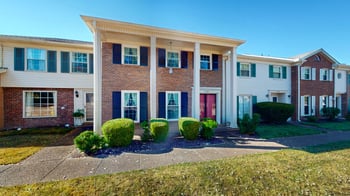
For this comparison, we're using a realistic mid-market condo at $350,000 — a 1BR in a well-maintained building with reasonable amenities. That's roughly the median for condos and townhomes in Davidson County right now, and it's the price point where the buy-vs-rent question is genuinely competitive.
The equivalent rental is a 1-bedroom apartment in a comparable Nashville neighborhood. Current 1BR apartment rents average $1,650/month across Nashville, ranging from around $1,200 in more affordable areas to $1,979+ in newer or better-located buildings. For an apples-to-apples comparison with a $350,000 condo, we'll use $1,750/month — a 1BR in a solid building in a similar part of town.
Current 30-year fixed mortgage rates are sitting at roughly 6.5%–6.6% as of June 2026 (Freddie Mac's most recent weekly average: 6.53%). Here's what monthly ownership costs look like at two down payment levels:
| Cost Item | 5% Down ($17,500) | 20% Down ($70,000) |
|---|---|---|
| Loan amount | $332,500 | $280,000 |
| P&I payment (6.55%, 30 yr) | $2,115 | $1,780 |
| PMI (5% down only, ~0.7%/yr) | $194 | — |
| Property taxes (~$975/yr per $100K assessed*) | $285 | $285 |
| Homeowners/condo insurance (~$150/mo) | $150 | $150 |
| HOA fees (mid-market estimate) | $450 | $450 |
| Total monthly housing cost | ≈ $3,194 | ≈ $2,665 |
*Davidson County went through a major reassessment in 2025. Assessed values jumped ~45%, and while the tax rate was adjusted downward, many owners still saw their bills rise. Budget $2.814–$3.254 per $100 of assessed value depending on your district — we've used the midpoint here. Verify the specific parcel before you buy.
Renting a comparable 1BR in a similar Nashville neighborhood: $1,650–$1,979/month depending on location and building quality. Our $1,750 benchmark is a reasonable middle of that range for a newer or renovated building.
Add renter's insurance (~$20/month) and you're at roughly $1,770/month all-in.
The monthly gap right now:
That gap is real, and it's the main reason "just buy instead of rent" doesn't always pencil out in this market.
That monthly premium isn't pure expense — some of it converts into equity and tax benefit. Here's where the money actually goes:
🏦 Equity buildup. In year one on a 5%-down loan at 6.55%, roughly $450–$500/month of your P&I payment goes to principal reduction. That number grows each year as you amortize. With 20% down, you're retiring about $380/month in principal in year one (lower payment, same amortization rate).
📈 Appreciation. Nashville condo prices were up about 0.8% year-over-year as of March 2026 — modest compared to single-family, but still appreciating. On a $350,000 purchase, 1% annual appreciation adds $3,500/year ($292/month) in net worth. If appreciation runs 2–3%, the math improves meaningfully.
🔒 Fixed costs. Your principal and interest payment never changes. Your rent almost certainly will — Nashville rents have softened recently but are unlikely to stay flat long-term in a growing city.
🧾 Mortgage interest deduction. If you itemize federal taxes, mortgage interest is deductible. At a $332,500 loan balance with ~$21,700 in interest paid in year one, this can produce real savings — but only if your itemized deductions exceed the standard deduction ($15,000 single / $30,000 married filing jointly in 2026).
Buying a home costs money upfront and more per month in the early years. The break-even point is when cumulative ownership costs equal what you would have spent renting — plus your equity gain covers the gap.
Assuming:
With 20% down, break-even runs approximately 5–6 years. With 5% down (higher monthly cost, higher selling costs relative to lower equity), break-even stretches to 7–9 years.
⚠️ The practical takeaway:
If you're buying a Nashville condo and there's any real chance you move, take a new job in another city, or significantly upgrade within 3–4 years — the numbers probably don't work in your favor. This market rewards buyers with a 5+ year horizon.
Several levers can swing this math significantly in either direction:
📉 Mortgage rates. At 5.5%, your monthly P&I on a $280,000 loan drops to $1,590 — that's $190/month less than at 6.55%. The rate environment matters enormously. Buying now with a plan to refinance when rates drop is a legitimate strategy, but only if you can carry the payment comfortably in the meantime.
🏢 HOA fees. This is the line item that surprises most condo buyers. A $300/month HOA vs. a $600/month HOA is a $3,600/year difference. Before you fall in love with a building, read the HOA financials. Underfunded reserves and aging infrastructure lead to special assessments — sometimes five figures. Ask for the last three years of meeting minutes and the current reserve study.
🏷️ Purchase price negotiation. With condo inventory up 17.7% year-over-year in Nashville and days on market stretching to 90+ in some segments, buyers have real leverage right now. Getting $15,000–$20,000 off the asking price, or negotiating seller-paid closing costs, meaningfully improves your long-term math.
🛋️ Rental concessions. The rental market has softened. Many landlords and management companies are offering one month free, reduced deposits, or flexible lease terms. A free month on a $1,750 lease is effectively a $145/month discount for the first year. Shop your rental options before assuming the asking price is final.
📍 Neighborhood and building specifics. A $350,000 condo in a walkable part of East Nashville with strong rental demand is a different asset than a $350,000 unit in a building with known deferred maintenance or stagnant resale activity. Location within Nashville — and building-specific fundamentals — can swing the appreciation line substantially.
The downtown Nashville condo market — particularly buildings like 505, Broadwest, and the newer high-rise inventory — operates by different math. HOA fees in mid-market high-rises typically run $500–$700/month; at Broadwest they can reach $1,200–$3,000/month depending on unit size.
At those fee levels, buying a downtown condo is more lifestyle decision than financial optimization. The amenities are real, the location premium is real, and the lock-and-leave convenience is real — but the pure rent-vs-buy math rarely favors buying in that segment unless you're putting significant equity down and staying a long time.
Downtown 1BR rents average around $3,665/month per recent data — so at least the purchase side has rental competition at that price level. But the monthly ownership costs on a $700,000+ downtown purchase are substantial. Run the numbers for your specific building before assuming the calculus is similar to the broader condo market.
Buying makes more sense if:
Renting makes more sense if:
Mortgage rates have been volatile in 2026 — they climbed after April's CPI reading showed inflation at 3.8% annually, the highest since 2023. As of early June, 30-year fixed rates are running 6.5%–6.6%. That's meaningfully higher than early spring. If rates pull back toward 6.0%–6.2% later this year (possible, not guaranteed), the monthly ownership gap narrows by $200–$300/month on a typical condo purchase. That's worth factoring into your timing decision — but don't wait for a specific rate number if the right property comes available at the right price.
In most cases, renting is cheaper on a pure monthly-cost basis in mid-2026. Buying a $350,000 condo with 20% down runs roughly $895/month more than renting a comparable 1BR apartment. The gap is larger with a lower down payment. Whether buying makes financial sense depends on how long you stay, how much you put down, and building-specific HOA costs.
For a standard mid-market condo, Nashville HOA fees typically run $300–$700/month. The median for downtown buildings is around $652/month, but can reach $1,200–$3,000+ in high-amenity luxury towers. HOA fees have trended upward in 2025–2026 due to rising insurance premiums and maintenance costs. Always review the reserve study before committing.
At current prices and rates, most buyers need a 5–7 year horizon for the financials to favor ownership. With 20% down and moderate appreciation, break-even runs closer to 5 years. With 5% down and higher closing/selling costs, it's more like 7–9 years. If your timeline is under 4 years, renting is almost certainly the better financial call.
Condo prices in Nashville were up 0.8% year-over-year as of March 2026 — modest appreciation, not decline. Condo inventory has increased significantly (up 17.7% from March 2025), which is giving buyers negotiating leverage they haven't had in years. The condo market is softer than single-family, which can work in buyers' favor on both price and terms.
As of mid-2026, 1BR apartments in Nashville average roughly $1,650/month across the metro, with newer or better-located buildings running $1,750–$1,979. The most affordable neighborhoods (Antioch, Southeast Nashville) come in around $1,045–$1,095. Downtown Nashville 1BRs average around $3,665/month, reflecting the significant location premium. Rents have softened modestly year-over-year, and concessions are available if you ask.
Tennessee has no state income tax, which is a meaningful advantage for residents compared to most other states. Property taxes in Davidson County are moderate, though the 2025 countywide reassessment pushed assessed values up ~45%, and many owners saw their actual bills increase even after the rate adjustment. Budget $2.814–$3.254 per $100 of assessed value, depending on your district.
We're happy to work through the actual math for a condo you're considering — purchase price, HOA, property taxes, and your specific down payment — so you're comparing apples to apples before you decide. No pressure. No sales pitch.
Talk to James or Stephanie →Related Reading
⚑ Flag: If a dedicated Nashville condo search or condos-for-sale page exists, link it here. If not, worth creating.
.png)
James & Stephanie Crawford
Nesting Realty · Nashville, TN
Nashville natives with 22+ years and 500+ sales. James is boots on the ground — in buildings, reading comps, walking properties. Stephanie manages strategy, contracts, and negotiations as the broker of record. Boutique team, no hand-offs, no assistants. When you work with Nesting Realty, you work with us. We also list for 2% — full service.

No — it's not automatically a bad time to buy in Nashville. But it's not automatically a great time either. It really depends on your payment comfort, your timeline, and whether you value negotiating room over chasing the perfect interest rate. As Nashville natives who have worked with buyers across Donelson, East Nashville, Bellevue, and beyond, we can tell you: this is a transitional market, an
Should you wait for interest rates to drop before buying a home in Nashville?Waiting for lower rates sounds logical, but in Nashville’s market, delaying often means higher prices, more competition, and fewer choices — which can outweigh the benefit of a slightly lower rate.If you’re asking this question, you’re not casually browsing. You’re already thinking seriously about buying — you’re just tr

If you’re buying a condo or townhome, you’ll probably hear the term HO-6 insurance pretty early. And it usually sparks the same question: “Doesn’t the HOA’s insurance already cover this?”Quick answer: The HOA’s master policy typically covers the building and common areas. Your HO-6 policy covers your unit’s interior, your belongings, and your liability—and your lender usually requires it to final
A few things got genuinely easier. A few got tighter. Here's what's changing in Middle Tennessee.If you've been priced out of a single-family home in Nashville and started looking at condos and townhomes, your timing might actually be working in your favor — for a change.On March 18, 2026, Fannie Mae and Freddie Mac dropped a coordinated set of condo financing changes that have been described as