Open: Sun 2:00 PM - 4:00 PM
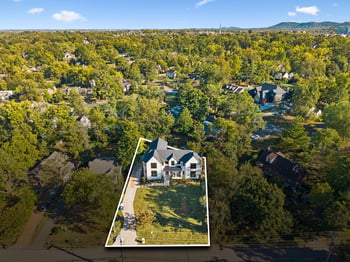
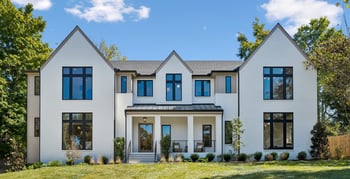
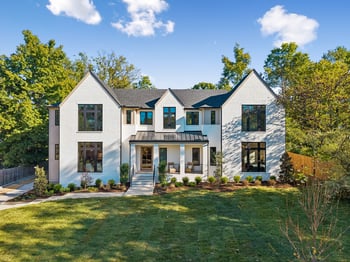
$2,950,000
Active
6
Beds
8
Baths
5000
Sqft
0.36
Acres
3020 New Natchez Trce, Nashville, TN 37215
MLS#: 3619099




What sellers need to know about closing-cost credits, rate buydowns, and how to use concessions as a tool — not a panic move.
Quick Answer
Yes — when you use them as a strategy, not a reaction. In Greater Nashville, median days on market has stretched to 70–77 days in early 2026, which means first-time buyers have time to compare homes, compare payments, and compare how much cash they'll need at the closing table. The cleanest play for most sellers is a targeted closing-cost credit — or a lender-approved rate buydown — paired with a price that will still appraise cleanly. That beats chasing the market with two or three price reductions after the fact. Questions about what's working right now in your neighborhood? Call or text us at (615) 751-8913.
First-time buyers in Nashville don't usually lose deals because they weren't motivated enough. They lose deals because the cash-to-close math hits harder than they expected.
Here's what stacks up at the closing table in Middle Tennessee: lender fees, title costs, required prepaids, Tennessee's realty transfer tax ($0.37 per $100 of the sale price), and the way property taxes get collected. Tennessee taxes are paid in arrears, which means the buyer picks up a prorated credit to the seller at closing — another line item that surprises people. In Davidson County, the seller also customarily pays for the owner's title insurance policy, which affects how buyers are thinking about what's already "priced in."
When a buyer is putting 3 to 5 percent down, there isn't a large cushion of extra cash sitting behind it. That's why concessions have made a real comeback in Nashville in 2026.
Here's the mindset shift that matters for sellers: a concession isn't charity, and it isn't an admission that something is wrong with your house. It's a tool to pull the most qualified buyer off the sidelines and into a clean contract — without you spending the next 60 days chasing the market with price cuts.
But concessions only work when they're paired with two things: (1) a price that appraises, and (2) terms that are structured correctly for the buyer's loan type. An oversized credit written without regard to program limits can unravel a deal in the final week of underwriting. That's not a problem you want.
In 2026, when a first-time buyer asks about concessions, they're usually asking one underlying question — even if they never say it out loud: How much cash do I need to bring to closing?
Most first-time buyers can handle the monthly payment if the home fits their price range. What catches them off guard is everything wrapped around the loan: lender origination fees, title and escrow costs, required homeowner's insurance prepaids, and the prorated tax credit that goes to the seller at close.
So the concession that actually moves the needle isn't a vague "allowance." It's a clean, lender-approved credit that shows up on the Closing Disclosure and reduces the amount the buyer has to wire at closing.
This is also why concessions aren't one-size-fits-all. A buyer putting 20 percent down may not care about a $6,000 credit. A first-time buyer using an FHA loan with 3.5 percent down might care a great deal. And buyers using THDA's Great Choice program — which pairs a 30-year fixed-rate loan with up to $15,000 in down payment and closing cost assistance — are often working with layered financing where the structure of a seller credit matters as much as the dollar amount.
One more distinction worth understanding: not all "concessions" are treated the same by lenders. Items that cover allowable closing costs and prepaids are handled differently from items treated as sales concessions that can affect underwriting calculations. The wording, the structure, and how it appears on the Closing Disclosure matters — and this is one of the places where experienced representation on both sides of the table prevents late-stage surprises.
A closing-cost credit removes the biggest friction point.
Many first-time buyers aren't asking for help because they're underqualified. They're asking because cash-to-close is genuinely tight when you factor in Nashville-specific costs — transfer tax, title insurance customs, and the tax proration that runs at closing.
A credit often does more than the same dollars off the price.
A modest price reduction can barely register in the monthly payment at current rates. The same amount as a closing-cost credit can cover a meaningful portion of what the buyer needs to wire at closing. That's a different kind of relief — and buyers feel it.
Concessions sit on top of pricing — they don't fix it.
If the home is overpriced relative to real comps, a credit doesn't solve that. It delays the market's feedback and usually results in two rounds of negotiation instead of one.
Loan programs have hard limits.
For conventional financing with a high loan-to-value ratio, allowable financing concessions are capped as a percentage of the sales price or appraised value. If a credit exceeds allowable costs, the excess can be treated as a sales concession that changes the underwriting math. Writing an oversized credit without confirming limits with the buyer's lender is one of the most common ways deals get complicated late.
The appraisal is the guardrail, not the contract.
You can agree to any price-and-credit combination in writing. If the value isn't supported by comps, the lender won't finance it the way everyone expects. A solid concession strategy is one that still appraises cleanly.
Nashville builders trained buyers to expect incentives.
Across the outer ring — Nolensville, Mount Juliet, Murfreesboro, Spring Hill, Gallatin — new construction communities are actively advertising rate buydowns and closing cost help. You don't have to match the builder, but you do need to understand that incentives are now part of what buyers are mentally comparing when they tour your resale home.
The best offer isn't always the highest number.
Net proceeds, financing strength, timeline, and the probability of a clean close all matter. A slightly lower offer with straightforward terms often beats a higher one built around fragile concessions.
First-time buyers tend to have two ceilings at once: how much monthly payment they can sustain, and how much cash they can bring to closing.
A price cut moves the payment slightly. A closing-cost credit moves the cash-to-close meaningfully. That's why a well-structured credit often pulls a buyer forward faster than "let's knock off another $5,000 and see what happens."
A simple example: on a $400,000 home in Nashville, a $5,000 price reduction is a modest percentage move, and at current interest rates in the mid-6% range, the monthly payment impact is small — often less than $30 a month. But a $5,000 closing-cost credit can cover a meaningful slice of lender fees, title costs, and prepaids for a buyer putting the minimum down. Those are real dollars the buyer doesn't have to wire. That difference is often what gets a deal across the finish line.
What we're seeing in Middle Tennessee in 2026 is that first-time buyers are still motivated — but they're deliberate. With median days on market stretching to 70–77 days and inventory up roughly 28% compared to a year ago, buyers have time to tour multiple homes, run the numbers, and wait for the right fit. Your listing isn't just competing with the market in general. It's competing with the three other homes a buyer walked through this weekend and the new construction community down the road offering a rate buydown.
Here's something that relocating buyers often underestimate: in Nashville, the "starter home" buyer isn't just thinking about the kitchen and the commute. They're trying to control the total monthly number while factoring in costs that vary more than they expect — property taxes that differ significantly between Davidson, Williamson, Rutherford, and Wilson counties, HOA fees that can swing hundreds of dollars a month between subdivisions, and insurance costs that have been climbing. When those numbers feel unpredictable, buyers tend to cling to the one thing they can control: how much they pay at closing.
Concessions show up most often when a home is solid but the math is tight. It's not always about condition. It can be a perfectly good home where the buyer's down payment is already committed, they've spent money on inspections and appraisals on other properties, and they simply don't want to drain every dollar they have to close.
For sellers, the 2026 Nashville market offers three basic paths: (1) price accurately and hold firm, (2) price high and chase it with reductions, or (3) price at real market value and use a targeted credit to expand the buyer pool. In this market, option three is usually the cleanest way to win first-time buyers without turning your listing into the one people are wondering about.
Thinking about selling a home that's likely to attract a first-time buyer?
We'll map the comps, show you what a credit changes for a buyer's cash-to-close, and build a negotiation plan that keeps the appraisal and your net proceeds clean.
(615) 751-8913 Get in TouchIf you're considering concessions, use a repeatable approach that protects your price, your timeline, and your net.
1. Start with real market value, not a wish price.
Pull recent sold comps that match your neighborhood, condition, and layout. Then sanity-check against what a first-time buyer in your price range would actually tour — including new construction competition.
2. Decide what problem you're solving: cash-to-close or monthly payment.
A closing-cost credit helps cash-to-close. A lender-approved rate buydown can help the monthly payment. If you don't pick the problem, you'll spend money without changing buyer behavior.
3. Keep the credit targeted and written correctly.
Structure it as a clear seller credit toward allowable buyer closing costs and prepaids — and confirm with the buyer's lender before you finalize. Vague "allowances" create underwriting questions at the worst possible moment.
4. Confirm the credit fits the buyer's loan type and down payment.
Conventional financing concession limits vary with LTV. FHA and THDA-backed loans have their own rules. A credit that looks generous on paper can become a problem if it exceeds what the program allows. This is one of the most common late-stage surprises in Nashville transactions.
5. Choose a number that expands your buyer pool, not one that feels random.
In many first-time buyer price points, a modest but well-targeted credit opens the door for buyers who are qualified but cash-sensitive. Pair it with clean presentation so your home is clearly the safe, easy choice.
6. Have a Plan B before you list.
If you don't see strong activity in the first two weeks, decide ahead of time whether you'll adjust price, increase the credit, or improve terms. Making small adjustments every ten days reads as uncertainty to buyers — and uncertainty makes them wait.
If you're planning to sell in Nashville or Middle Tennessee in the next 30 to 180 days and your most likely buyer is a first-time buyer, the next question isn't whether you should offer concessions. It's whether you have a comp-backed strategy that makes your home the easiest yes in your price range.
We'll help you work through a realistic value range, identify the cash-to-close friction points first-time buyers are running into right now, and decide whether a credit, a price adjustment, or a terms change is the smartest lever for your neighborhood and your timeline.
Does offering a concession signal something is wrong with my house?
Not in this market. In 2026 Nashville, concessions are a routine tool for solving the buyer's biggest friction point — cash to close — without changing the home itself. The key is that the credit is written correctly, the home is priced to appraise, and the structure makes sense for the buyer's loan type. A well-handled concession doesn't raise questions. A vague or oversized one might.
What's more effective for a first-time buyer: a price cut or a closing-cost credit?
For most first-time buyers, a closing-cost credit hits differently than a price reduction. At current interest rates, a $5,000 price cut barely moves the monthly payment. The same $5,000 as a credit can reduce the funds a buyer has to wire at closing. The right answer depends on the buyer's loan, their down payment size, and whether the home will still appraise at the agreed price — which is worth running the actual math on.
Can seller concessions be applied to the down payment?
Generally, no. Most loan programs allow seller credits to cover closing costs, prepaids, and approved financing costs — not the buyer's required minimum down payment. Buyers using THDA's Great Choice Plus program have separate down payment assistance available through THDA itself; a seller credit typically handles the closing cost side. A lender familiar with Tennessee programs will confirm exactly how the credit applies on the Closing Disclosure.
How do you keep a concession from creating an appraisal problem?
Price the home based on real comparable sales first, then structure the credit within program limits and within the buyer's actual closing costs. If the deal only works when the price is inflated to offset the credit, it's fragile — and appraisers will see it. The goal is a price-and-credit combination that makes sense to an appraiser and holds up through underwriting.
Am I just reducing my net proceeds when I offer a concession?
Not automatically. A targeted credit is sometimes cheaper than an extended listing, multiple price reductions, or a buyer who walks at the end of the inspection period. The real calculation is net proceeds plus timeline plus certainty of closing. The best concession strategy is one that expands the buyer pool without overpaying for the outcome — and one that's been modeled against your actual costs and timeline, not just guessed at.
.png)
Stephanie and James Crawford are Nashville natives and the team behind Nesting Realty. With 22+ years of experience and 500+ closed transactions across Davidson, Williamson, Wilson, Rutherford, and surrounding counties, they specialize in helping sellers navigate a more strategic, less reactive market. Questions? Call or text (615) 751-8913.
Sources: REINTN.org: Middle Tennessee Days on Market / Inventory Data (Feb–Mar 2026); JVM Lending: Nashville Real Estate Market Forecast (Jan 2026); THDA.org: Great Choice Home Loan / Great Choice Plus Program Details; Fannie Mae Selling Guide: Interested Party Contributions (B3-4.1-02); Tennessee Department of Revenue: Realty Transfer Tax Rate.
Generally, the most costly item associated with selling a home is the commission. We own our brokerage which offers us savings that many agents can’t match without skimping on marketing. We charge a 2% listing fee. Of course, there are many other fees involved in a traditional sale. Let’s discuss each separately. It’s an insurance policy that guards lenders and new owners against undisclosed lien

If you’re a Nashville homeowner planning a move, this is usually the biggest (and most stressful) question: Should you sell first, or buy first? There’s no universal right answer — but there are very clear wrong ones, especially in today’s market.We’ve helped hundreds of Nashville homeowners navigate this exact decision, and the best choice almost always depends on your timing, finances, and risk
Short version: In 2025, listing a home in Nashville did not guarantee a sale. In fact, about half of sellers didn’t sell on their first attempt.We analyzed Realtracs data for existing-home listings only in Davidson County for Q1 and Q2 of 2025—no new construction, no to-be-built properties. What the data revealed isn’t dramatic or scary. It’s something more useful than that.2025 was an honest mar

If you’ve asked ChatGPT (or another AI tool) a real estate question lately, you’re not alone. Buyers are using AI to understand the process faster. Sellers are using it to sanity-check pricing, prep, timing, and negotiation strategies. And honestly? That can be a good thing.The catch: AI is great at general education… but it doesn’t know your street, your floorplan, your school zone, your neighbo