
New - 6 Hours Ago




A pre-listing inspection in Nashville usually costs $400 to $600, with condos and smaller homes at the lower end. It pays off most on homes 20 or more years old and homes likely to sell to FHA or VA buyers.
Nearly every buyer in Middle Tennessee orders an inspection, and the report usually lands a few days after you've accepted their offer. That's when repair requests, price cuts and cancellations happen. A pre-listing inspection moves that report to a few weeks before your list date, and might save you money in the long run. In the Nashville area, most sellers do not perform pre-listing inspections, but doing so, can be a great stratgey in certain scenarios.
Budget $400 to $600+. Square footage, age and the inspector you choose set where you land: condos, townhomes and smaller houses fall toward $400, while larger and older homes push above $600. One established Nashville firm lists inspections starting at $535, with a 2,500-square-foot home averaging about $565.
Tennessee has licensed home inspectors through the Home Inspector Licensing Program since 2005. Look up any inspector's license at verify.tn.gov before you schedule.
| Add-on | When it's worth paying for |
|---|---|
| Termite (WDI) | Nearly always. Tennessee's humidity keeps termites active, and buyers routinely order this report anyway. |
| Radon | Homes with a basement or crawl space. Davidson, Williamson, Rutherford and Wilson counties are in EPA Zone 1, the highest radon-potential tier on the EPA's Tennessee map. |
| Sewer scope | Older in-town homes with mature trees. Roots and aging lines are common in areas built out before the 1970s, like Inglewood, Sylvan Park and much of Donelson. |
| Mold sampling | Only with a reason: a musty crawl space, past leaks or visible growth. |
Ask for a bundle price. Most inspectors charge less for add-ons booked with the main inspection.
Buyers have more to choose from than they did two years ago. Across nine Middle Tennessee counties, average days on market for single-family homes rose from 28.8 in the first half of 2024 to 36.3 in the first half of 2026, and active inventory reached 9,783 in July, the highest in our three-year Realtracs data. With that many options, buyers pass on houses that look like projects. (More in our August market report.)
Our view: most resale homes built before about 2006 should be inspected before they go live. These are the situations where it pays most:
Skip it when:
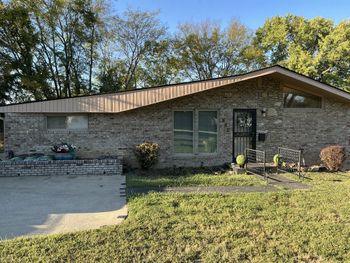
In February 2026 we listed a 1994 three-bedroom in Heritage Valley, La Vergne, at $329,000. It had 30 showings in its first three weeks, so traffic was never the issue. Condition was: several different buyer's agents used their feedback to say some version of "needs work," and two price reductions totaling $4,000 came before it went under contract on day 21. It closed at $325,000 with an FHA buyer, which Realtracs records as 98.8% of the original list price. After $6,500 in seller concessions, the seller netted $318,500, or 96.8%. That two-point gap doesn't show up in any published market report. When buyers can't put a number on "needs work," they tend to assume the worst and bring that number to the negotiation. A pre-listing report lets you put a real number on it first, whether that's a contractor's quote, a paid receipt, or a list price that already accounts for the roof's age.
Tennessee's Residential Property Disclosure Act requires sellers to give buyers a disclosure statement listing material defects the owner knows about (TCA § 66-5-202).
No law makes you hand a buyer your inspection report. But once you've read it, its findings are things you know, and they belong on your disclosure. Don't redact the report and share what's left; buyers and their agents read that as hiding something. Our default is to share the full report along with receipts for whatever you fixed. We've written more about why in Sellers, Disclose Everything.
Estates and homes the owner hasn't lived in for three years can be exempt from the disclosure form. That exemption covers what a seller doesn't know. It doesn't cover a defect listed in a report on your kitchen counter. Heirs will find the details in our guide to selling inherited property in Nashville.
When the report comes back, sort every item into one of three piles:
For local pricing on the repairs we see most often, see Nashville Home Repair Costs.
Book it three to six weeks before your list date, after you've decluttered and before photos. The inspection takes two to four hours, and most reports arrive within a few days. The slow part comes next: roofers, HVAC techs and plumbers can take a week or more to come out for quotes, especially in spring. Build that into your selling timeline.
Budget $400 to $600, depending on size, age and the inspector. Condos, townhomes and smaller homes land toward the lower end. Termite, radon, sewer scope and mold testing are priced separately, and most inspectors discount them when booked with the main inspection.
No. Tennessee law doesn't require one, and neither do lenders. Tennessee does require home inspectors to hold a state license, which you can look up at verify.tn.gov before you book.
No law requires you to hand over the report. But the defects it identifies become things you know, and Tennessee's disclosure statement (TCA § 66-5-202) covers material defects known to the owner. Plan to disclose what the report finds if not addressed prior to listing.
Probably, but possibly not. A seller's report doesn't replace the buyer's inspection. What it changes is how many surprises the buyer's inspector turns up and how much room is left to renegotiate. In multiple offer scenarios, often a buyer will forgo an inspection contingency if one is available.
I likely would not. Davidson, Williamson, Rutherford and Wilson counties sit in EPA Zone 1, the highest radon-potential tier, and the EPA recommends testing every home regardless of zone. A short-term test runs at least two days, so schedule it alongside the inspection if interested.
Not sure your house needs one?
Before we price a home, James walks it and Stephanie works through the comps. Tell us about yours and we'll say whether a pre-listing might be worth the money. Our listings are 2%, with the same two people start to finish.
Talk Through Your Home With UsOr call (615) 751-8913.
.png)
James & Stephanie Crawford
Nashville natives and the husband-and-wife team behind Nesting Realty since 2003, with 500+ homes sold across Middle Tennessee. James handles showings and walkthroughs in person. Stephanie, the broker, handles pricing, contracts and negotiation. No hand-offs, no assistants. More about us.
General information, not legal advice. For questions about your disclosure obligations, talk with a Tennessee real estate attorney. Equal Housing Opportunity.