New - 15 Mins Ago





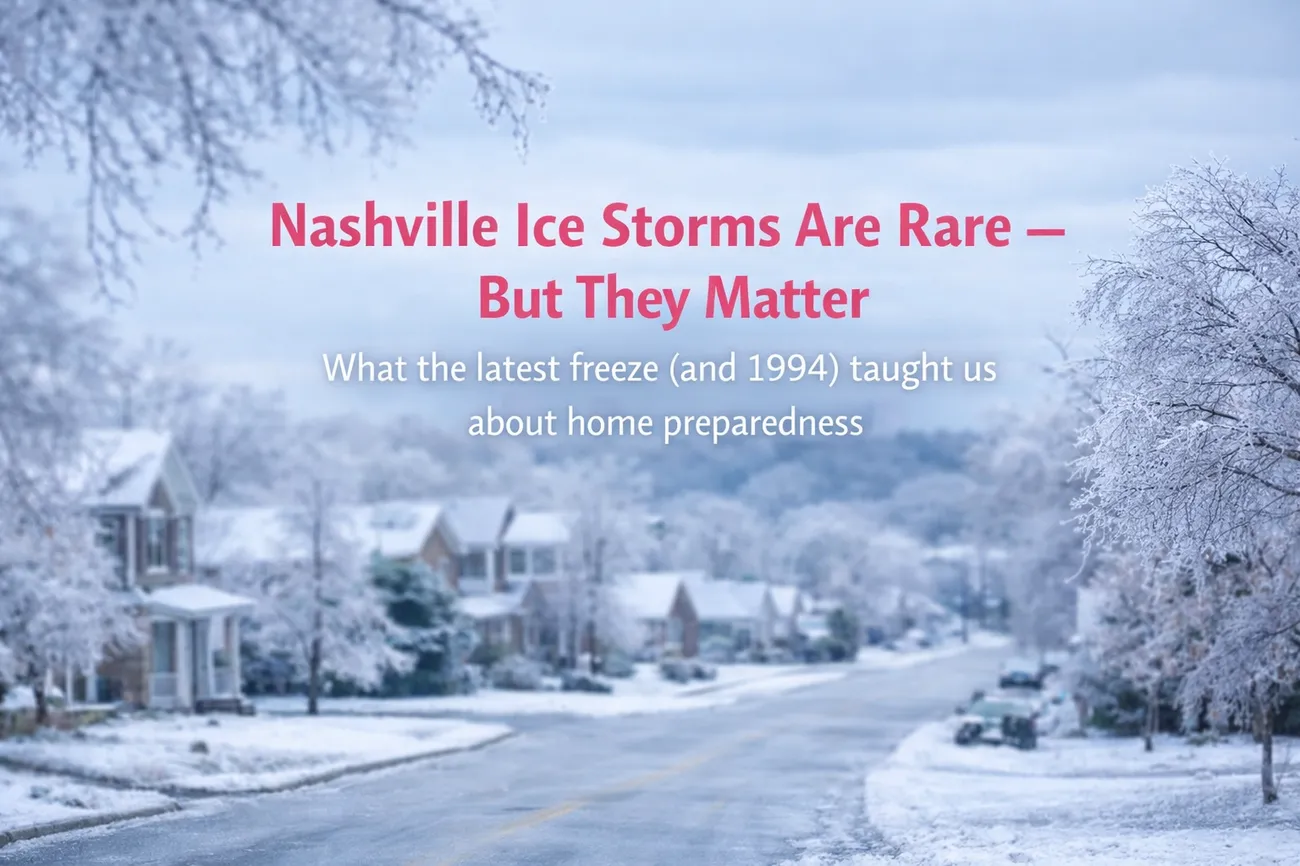
If the recent ice event in Nashville felt disruptive, you’re not imagining it. Middle Tennessee doesn’t get frequent severe winter weather, which is exactly why it can hit harder when it does. Slick roads, power outages, burst pipes, and weeks of cleanup are common side effects.
Long-time Nashvillians still reference the 1994 ice storm, when prolonged freezing rain crippled power infrastructure, shut down roads, and left thousands without electricity for days. That storm became a benchmark reminder: low frequency doesn’t mean low risk. The recent ice event echoed many of the same vulnerabilities—especially for homes that weren’t winter-ready.
This is your cue to prepare before the next one.
Ice storms often cause short-term isolation: roads close, deliveries pause, and power can be unreliable. A basic home emergency kit should cover 72 hours at minimum.
Must-have supplies
Water: 1 gallon per person per day (don’t forget pets)
Non-perishable food: No-cook items preferred (protein bars, canned goods)
Manual can opener
First-aid kit: Include prescriptions, pain relievers, and bandages
Flashlights or lanterns: LED preferred
Extra batteries (or rechargeable power banks)
Blankets & cold-weather clothing
Portable phone chargers
Cash: ATMs may be offline
Battery-powered or hand-crank radio
Nice-to-have upgrades
Space heater rated for indoor use (with tip-over shutoff)
Fire extinguisher
Ice melt that’s safe for concrete and pets
Most ice-storm damage isn’t dramatic—it’s expensive and annoying. A little prevention goes a long way.
Seal drafts around doors and windows with weatherstripping
Add insulation to attics and crawlspaces if thin or aging
Keep interior doors open to allow warm air circulation
Insulate exposed pipes (garage, crawlspace, exterior walls)
Disconnect garden hoses and shut off exterior spigots
Let faucets drip during prolonged freezes
Know where your main water shutoff is—before you need it
Clear gutters so ice doesn’t back up under shingles
Check flashing and roof penetrations for weak points
Trim tree limbs near the roof and power lines
Secure outdoor furniture and décor that can freeze or shift
Ice turns everyday tasks into hazards. Most winter injuries happen at home, not on highways.
Apply ice melt early—before foot traffic packs ice down
Use sand or kitty litter for traction if melt isn’t available
Wear shoes with grip; avoid smooth soles
Take short steps and keep hands free for balance
Avoid travel during freezing rain events when possible
Slow way down—bridges and hills freeze first
Keep an emergency kit in your car (blanket, flashlight, snacks)
Never assume Nashville roads are treated like northern cities—they aren’t
Never use grills or generators inside
Keep space heaters at least 3 feet from anything flammable
Install and check smoke and carbon monoxide detectors
The 1994 ice storm taught Middle Tennessee a lasting lesson: weather memory fades faster than infrastructure risk. Homes built decades ago, newer builds with energy-efficient but tighter systems, and vacant or lightly occupied homes are all vulnerable in different ways.
Preparedness isn’t panic—it’s protection. A few hours of prep now can prevent:
Thousands in water damage
Weeks of displacement
Insurance claims that could’ve been avoided
Was the recent Nashville ice storm unusual?
Ice storms aren’t common every winter, but they are a recurring Middle Tennessee risk. When they happen, impacts tend to be outsized due to limited road treatment and infrastructure strain.
How can I prevent frozen or burst pipes?
Insulate exposed pipes, keep interior temperatures consistent, let faucets drip during hard freezes, and shut off exterior water sources.
Should I worry about my roof during an ice storm?
Yes. Ice can trap water under shingles and clog gutters. Proper drainage and maintenance reduce the risk of leaks and long-term damage.
Is ice melt safe for all driveways?
Not always. Some products damage concrete and landscaping. Look for calcium magnesium acetate or blends labeled “concrete-safe.”
Do newer homes handle ice better than older homes?
Not automatically. Newer homes may be more energy-efficient but still have vulnerable plumbing runs or tight systems that need preparation.
Should I prepare even if forecasts look mild?
Yes. Ice forecasts change quickly, and preparation is far easier before temperatures drop.
Nashville doesn’t need to become Chicago to justify winter prep. Ice storms—whether in 1994 or today—prove that being ready beats being surprised. Take the time now to stock supplies, winterize smartly, and make your home safer the next time the forecast turns icy.

Is Nashville, TN, a safe place to live? Here's what you should know about Nashville crime statistics and neighborhood safety considerations for your home search.Nashville is Tennessee's vibrant capital city, known worldwide as Music City for its rich musical heritage and thriving entertainment industry. 🎵 Beyond the honky-tonks and recording studios, Nashville offers a booming economy, excellent

If you're currently renting in Nashville, chances are you've thought about buying a home- but maybe you’re hesitant. After all, rent can feel simpler: one monthly payment, no surprise repair bills, no worrying about property taxes.But here’s the flip side many renters overlook: when you rent, you’re building your landlord’s wealth, not your own.Buying a home isn’t just about having a place to liv
If you are considering moving to Nashville, you’re certainly not alone. Greater Nashville continues to attract new residents from across the country, drawn by job opportunities, culture, and a lifestyle that still feels more approachable than many major metros.That said, moving to Nashville in 2026 looks different than it did just a few years ago. The city is still growing, but housing costs, tr
.png)
Looking for the perfect mix of outdoor adventure and Southern charm? Nashville's incredible park system offers something for everyone – from waterfront retreats to historic gems that'll make you fall in love with our city all over again.As Nashville natives and realtors with 21 years of experience, we've explored every corner of our beloved Music City. Whether you're house hunting or already call