New - Just Now



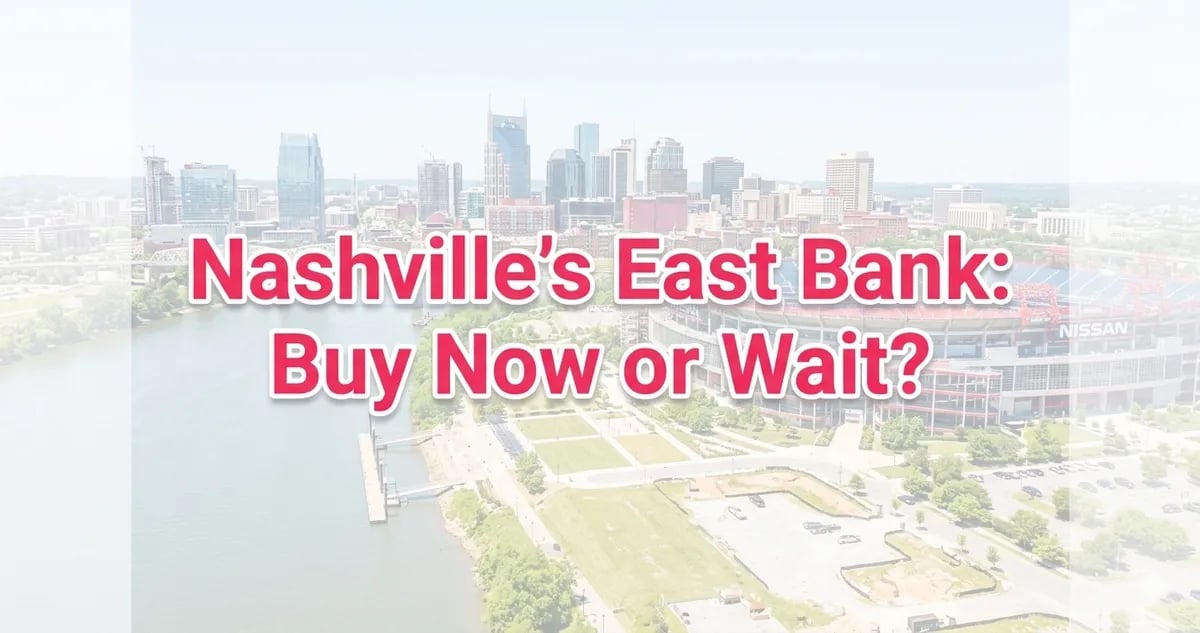
550 acres. A new Titans stadium. Oracle's world headquarters. A $624M performing arts center. The most ambitious redevelopment in Nashville's history is moving from planning to shovels — and the neighborhoods around it are already priced for what's coming.
If you own property near the East Bank — or you're trying to decide whether to buy there — you need to understand what's actually happening, what the timeline looks like, and what the real answer is to the question everyone's asking: has the appreciation already happened, or is there more to come?
We'll give you a straight answer. But first, some context on the scale of what's being built.
The East Bank is a 550-acre area adjacent to the Cumberland River, running from River North and the planned Oracle campus in the north all the way to I-24 to the south. It includes 130 acres of Metro-owned land, currently comprised mostly of asphalt parking lots, industrial and commercial uses, and Nissan Stadium. The size of the project is nearly ten times the size of Nashville's Gulch neighborhood.
That last comparison matters. The Gulch went from a rail yard to one of Nashville's most expensive zip codes. The East Bank is ten times that footprint, with more institutional investment behind it and a defined development authority running the show.
The East Bank Development Authority — created by Mayor Freddie O'Connell and charged with overseeing the planning, design, and implementation of the redevelopment — selected The Fallon Company in April 2024 after a lengthy RFP process. They are the master developer for the first 30 acres of Metro-owned land.
This isn't a vision document anymore. Multiple projects have crossed from planning into active construction or permitting. Here's where each stands as of May 2026:
🏟️ New Titans Stadium
The $2.2 billion stadium passed a critical construction milestone in late 2025, when a topping-out ceremony celebrated the hoisting of the final piece of the ring beam to the top of the structure. It's expected to be complete in time for the 2027 season. The stadium sits at the center of the East Bank district and anchors the broader buildout around it.
🏘️ Eastpoint (The Fallon Company, 30 Acres)
The Fallon Company, Mayor O'Connell, and the East Bank Development Authority announced in March 2026 that construction documents were finalized and filed. The first project to break ground within Phase 1 is Eastpoint Flats, an affordable residential building. A formal groundbreaking for the broader Eastpoint development is scheduled for May 28, followed by a community event on May 30. The full plan calls for more than 300 residential units, a childcare facility, about 50,000 square feet of retail space, and a 600-room hotel near the stadium — all organized around walkable streets and a central public plaza.
💻 Oracle World Headquarters (River North, ~80 Acres)
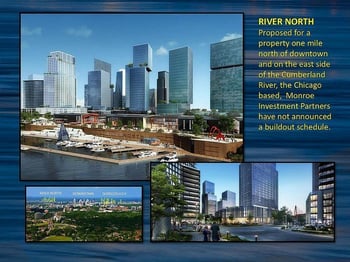
Oracle filed permits to demolish roughly 515,000 square feet of industrial buildings across its nearly 80-acre East Bank assemblage — one of the clearest signals yet that the company is moving from planning to execution. The planned $4.5 billion campus will feature office buildings, research facilities, and public green spaces along the Cumberland River, with the first phase targeted for completion by 2028. Plans also include a pedestrian bridge connecting the campus to Nashville's Germantown neighborhood, riverfront walking paths, and a Nobu hotel and restaurant as part of the development.
🎭 New Tennessee Performing Arts Center
TPAC breaks ground in early 2027 and targets completion by 2030. The architect is Bjarke Ingels of Denmark-based Bjarke Ingels Group. The project is backed by $500 million from the state of Tennessee, contingent on TPAC raising $100 million privately. The future building will offer 377,000 square feet and two theaters — one with 650 seats and one with 2,600 seats — positioned on the riverfront just across from Lower Broadway.
🏗️ East Bend (Former Scrapyard, ~41 Acres)
In April 2026, Metro Council gave final approval to zoning legislation paving the way for redevelopment of the former scrapyard on the East Bank. The investors have pitched it as a family-friendly neighborhood, with Council amendments limiting hotels and surface parking and requiring transportation analyses. Multiple outlets have reported that the company behind the Las Vegas Sphere is also eyeing the site for a Nashville venue.
🛤️ East Bank Boulevard + Music City Mile Bridge
Metro Nashville is designing East Bank Boulevard, a new multimodal north-south artery connecting the included neighborhoods. The Music City Mile pedestrian bridge design runs through end of 2026, with construction planned for early 2027.
Germantown sits directly across the river from the Oracle campus. The planned pedestrian bridge will connect Germantown's residential core to the new headquarters — which means Germantown is the closest walkable neighborhood to what will be Oracle's front door. Current median prices range from roughly $500,000 to $600,000, with the high end reaching well above $1M for larger historic homes on the tightest blocks. Limited inventory and continued redevelopment have kept appreciation above the citywide average.
For sellers in Germantown: the Oracle bridge is a real, documentable amenity — not a promise. Permits are filed, demolition is underway on the Oracle site. That changes how you frame proximity in your listing.
For buyers: this is a neighborhood where the walkability argument to Oracle is already baked into pricing. You're not buying at a discount. You're buying into something that still has room to move when Oracle's 8,500 employees need somewhere to live.
→ See our full Germantown neighborhood guide for current listings, price history, and block-by-block breakdowns.
As of March 2026, East Nashville's median home price sat at $560K, with homes averaging 89 days on market. That's a slight year-over-year dip in median price — partly inventory, partly the national rate environment — but the pockets closest to the river (Shelby Village, Historic Edgefield) have been more insulated than the broader zip.
East Nashville's proximity story is different from Germantown's. The East Bank's immediate border is the west bank of the river — East Nashville sits on the east side, looking across at the stadium and Eastpoint. The connection is the Shelby Avenue pedestrian bridge and the broader sense that this neighborhood functions as the living-and-dining district for a lot of people who work or play near downtown and the riverfront.
The East Bank adds for East Nashville: more destination traffic, more jobs within a short bridge-crossing distance, and another anchor for the "live near the river" narrative that's been moving prices in this ZIP for a decade.
→ See our East Nashville neighborhoods map for a block-by-block guide to the pockets and price ranges within 37206.
This is the real question, and it deserves a direct answer.
Partly, yes. Germantown has been one of Nashville's most expensive in-town neighborhoods for years. The Oracle announcement, the stadium vote, the Fallon Company selection — all of that was public information, and the market priced it in as each milestone landed. You can't buy into Germantown today at 2019 prices because you "know" about Oracle.
But the construction phase is different from the announcement phase. When Oracle's demolition permits were filed in January 2026, the project crossed a threshold — from long-discussed vision to active execution. That shift matters to buyers and sellers in ways the earlier announcements didn't.
There are still multiple catalysts that haven't hit the market yet:
The announcement-phase appreciation is largely behind you. The construction-phase and occupancy-phase appreciation is still ahead — but so is the reality of a decade of construction disruption, delays, and a rate environment that makes patience rational for a lot of buyers.
The story matters as much as the square footage. Buyers researching Germantown or East Nashville are almost certainly also researching the East Bank. Your listing should connect the dots clearly — not with hype, but with documented facts about what's being built, the proximity, and the timeline. That's part of the marketing job.
Construction disruption is a real objection to address. Buyers know that 550 acres under construction for the next decade means traffic disruptions, noise during certain phases, and visual chaos for a while. If your property is well-positioned relative to those nuisances, say so. If it's closer to the active work zones, price accordingly and disclose honestly.
The pedestrian bridge to Oracle changes the commute math. For Germantown sellers in particular — a buyer who works at Oracle will be able to walk or bike to work. That's not theoretical anymore. The bridge is in design and committed to in the development agreement. This is a concrete selling point for the right buyer profile.
Understand which phase you're buying into. If you're buying today in Germantown, you're buying into the construction-phase narrative — not the before-announcement discount. That's not a reason not to buy; it means your return on the development thesis plays out over the decade it takes Oracle to fully occupy, not the five years from announcement to groundbreaking.
Watch Salemtown. Salemtown sits in the same ZIP code as Germantown (37208), shares its walkability, and carries a noticeably lower price floor. It benefits from the same Oracle proximity story — the pedestrian bridge doesn't care whether you live on Monroe Street or just south of it. Buyers priced out of Germantown's core should look hard here before expanding the search radius outward.
The East Bank is not a speculative play for primary residence buyers. If you're buying a home to live in, you're not trying to time a development. You're asking whether this is a neighborhood you want to live in and whether it's priced fairly for what it is today. The development thesis is a tailwind — not the whole case.
Which Nashville neighborhood is closest to the East Bank development?
Germantown (37208) is the closest established residential neighborhood, sitting directly north of downtown on the west bank of the Cumberland — directly across from the Oracle campus in River North. The planned pedestrian bridge will connect Germantown to the Oracle development. East Nashville (37206) borders the development to the east across the river.
When will the East Bank be finished?
The East Bank will develop in phases over roughly a decade or more. The new Titans stadium opens in 2027. Eastpoint's first residential buildings break ground May 2026. Oracle's first phase targets completion around 2028. TPAC breaks ground in 2027 and opens around 2030. The former scrapyard (East Bend) was rezoned in April 2026 and is in early planning. Full build-out of all 550 acres extends well into the 2030s.
Will the East Bank development raise property values in nearby neighborhoods?
Some appreciation has already occurred in Germantown and East Nashville since the East Bank plans became public. Additional appreciation is likely as Oracle's hiring ramp accelerates, the stadium opens, and pedestrian infrastructure connects the development to existing neighborhoods. Market conditions, interest rates, and construction disruption all affect the pace. There's no guarantee of any specific outcome — just a strong underlying demand driver.
How many jobs will Oracle bring to Nashville's East Bank?
Oracle committed to employing 8,500 workers in Nashville by the end of 2031 — one of the largest corporate job commitments in the city's history. About 900 Oracle employees work locally as of early 2026. The remaining hiring ramp, as it materializes, will drive demand for housing near the campus.
Is the East Bank development good or bad for existing East Nashville residents?
It depends on what you own and what you value. Property owners near the development should see value appreciation and better walkable amenities. Longtime renters face real displacement pressure as prices rise. The development's own affordable housing component — Eastpoint Flats is the first building to break ground — is a partial acknowledgment of that tension, though 300 affordable units against a 550-acre buildout is a limited answer to a large problem.
Selling or buying near the East Bank?
We've been watching this development since the Oracle announcement and have helped buyers and sellers on both sides of the river. If you want a frank conversation about what your property is worth right now and what the East Bank story means for your decision, reach out directly.
Talk to James or Stephanie →More from Nesting in Nashville
.png)
James & Stephanie Crawford
Nesting Realty | Nashville REALTORS® | NestingInNashville.com
Nashville natives with 22+ years and 500+ transactions across Davidson County and Middle Tennessee. We don't hand clients off. When you work with us, you work with us — James on the ground, Stephanie on strategy and contracts. We list homes at 2% — full service, no shortcuts.
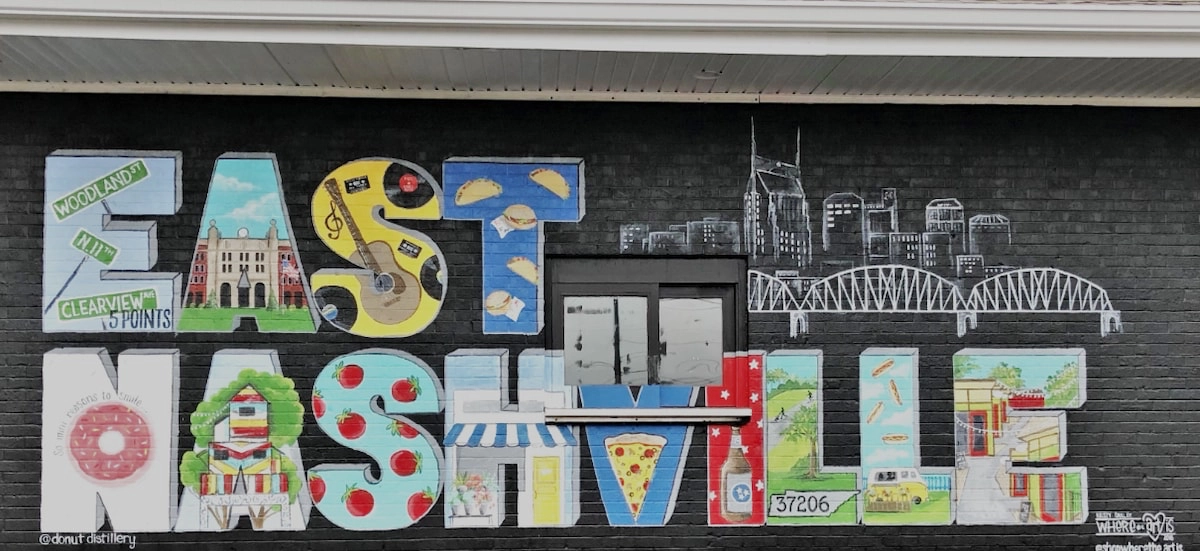
East Nashville isn't one neighborhood — it's a collection of distinct pockets, each with its own character, price point, and buyer profile. The zip code is 37206 (with the northern edge spilling into 37216), but where you land within that zip matters more than most people realize before they start looking.This is the block-level breakdown. For the full picture — market data, lifestyle guide, and
Should you wait for interest rates to drop before buying a home in Nashville?Waiting for lower rates sounds logical, but in Nashville’s market, delaying often means higher prices, more competition, and fewer choices — which can outweigh the benefit of a slightly lower rate.If you’re asking this question, you’re not casually browsing. You’re already thinking seriously about buying — you’re just tr
East Nashville isn’t just “a side of town.” It’s a patchwork of distinct pockets—each with its own pricing quirks, renovation rules, and buyer expectations. If you’re buying or selling in 37206 or 37216, the right agent can be the difference between a smooth closing and an expensive surprise.Here’s the shortcut: don’t choose based on a shiny social feed. Choose based on local pattern recognition—
A few things got genuinely easier. A few got tighter. Here's what's changing in Middle Tennessee.If you've been priced out of a single-family home in Nashville and started looking at condos and townhomes, your timing might actually be working in your favor — for a change.On March 18, 2026, Fannie Mae and Freddie Mac dropped a coordinated set of condo financing changes that have been described as